


Important note - nothing has changed as of today. The cabinet has approved the law text, but that only sends it to the Congress of Deputies, where it can be amended, held up or thrown out altogether. With the government short of a majority, and the main opposition party saying it will only support the bill if designated smoking areas are allowed and the hospitality trade is protected, neither of which the current draft offers, its passage is far from certain. The bar and restaurant industry is expected to fight it. The direction is clear enough, the detail is not.
Where you would no longer be able to smoke or vape?
Should it pass in something like its present form, smoking and vaping would be banned in a long list of public spaces including hospitality terraces, beaches, public and hotel swimming pools, sports facilities, national parks, outdoor concerts, festivals and public events, bus stops and transport shelters, in children's play areas and in work vehicles.
On top of that, fifteen metre exclusion zones would ring the entrances to hospitals, schools, universities, libraries, museums, cultural centres and playgrounds.
Health Minister Mónica García framed it as making clean air normal in shared spaces, arguing that anyone sitting down for a coffee should not have smoke from the next table thrown in with the order. Roughly a quarter of Spanish adults smoke every day, and the government attributes around 50,000 deaths a year to tobacco.
Vapes finally treated the same as cigarettes
The second big change closes a gap that has existed since vaping arrived. Electronic cigarettes, heated tobacco devices, nicotine pouches, herbal smoking products and shisha pipes would be treated exactly as cigarettes are, with or without nicotine in them. Anywhere you cannot smoke, you would not be able to vape either.
Vape sales would be confined to specialist shops, which would be barred from putting advertising in their windows. Under 18s would be banned from using tobacco rather than simply buying it, with any fines reportedly landing on parents. A ban on disposable vapes and a move to plain packaging were both stripped out before approval, although ministers say they want them back as the bill moves through parliament.
Why Lanzarote feels this more than the mainland
The Canary Islands would be covered in full. This is national law, and unlike taxation, where the islands keep their own lower IGIC rate, there is no separate arrangement for the archipelago.
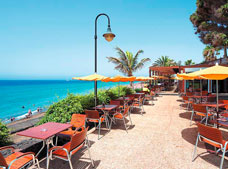
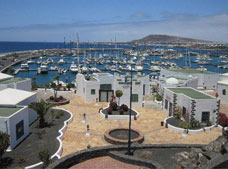
The difference here is the weather. On the mainland, terrace season has a beginning and an end. In Lanzarote it never stops, and the resorts are designed around that. The Avenida de las Playas, the waterfront at Marina Rubicón, the old harbour at Puerto del Carmen and the square at Pueblo Marinero all trade outdoors twelve months a year. A rule that irritates a bar in Bilbao for one season would reshape one in Playa Blanca permanently.
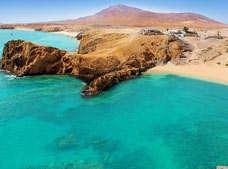
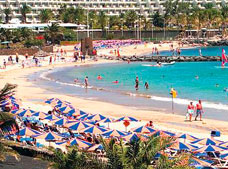
The beach clause hits the same way, given that the island's entire tourism offer starts with sand. Six kilometres of Blue Flag beach at Puerto del Carmen, the sheltered bays of Playa Blanca, Las Cucharas over in Costa Teguise, all of it smoke and vape free. Timanfaya would be caught too, since national parks are on the list. Welcome news for non smokers, though whether it puts anyone off booking is another question.
The airport is the exception, because it already operates as a no smoking building. There are small outdoor smoking areas at either end of the airside departures area, so smokers are catered for once through security, and that would not change.
Who would actually enforce it
This is the part nobody has answered. An indoor ban is easy to police because the venue carries the responsibility for its own four walls. A beach running for several kilometres, or a promenade with a hundred terraces along it, is a different job altogether. The draft says nothing useful about who issues the fines or what they would cost.
Spain is not doing anything unusual here, mind. France brought in comparable outdoor restrictions last summer, covering beaches, parks and areas around schools, and the trend across Europe is towards fewer places to smoke rather than more.
For the moment, carry on as you are. Terraces and beaches in Lanzarote remain legal to smoke and vape on, indoor spaces do not, and it is worth keeping half an eye on how the bill fares in Madrid.