


Organised tourist convoys using buggies, quads and safari-style vehicles are already prohibited on rural land and in protected areas across all seven municipalities of Lanzarote, under the Canary Islands Land Law and the island's own Planning Plan. The legal basis for the prohibition is the absence of any officially approved network of routes for these vehicles. Until such a network exists, the activity is not permitted outside public roads, regardless of how it is marketed or sold to visitors.
The First Major Fine Sets the Tone
In November 2025, the Cabildo issued the first significant sanction under the current framework, imposing a €4,500 fine on a tour company after environmental agents documented a convoy of buggies driving inside the Monumento Natural de Los Ajaches, a protected area in the municipality of Yaiza that is also a Special Protection Area for Birds. The infraction was classified as serious under current environmental and territorial protection regulations.
Cabildo president Oswaldo Betancort described the sanction as "an exemplary measure that demonstrates the firm will of this institution to enforce the law and protect Lanzarote's natural heritage", and added that "Lanzarote cannot be understood without its nature, and defending it is a collective obligation."
The fine followed a formal Cabildo communication earlier in 2025 in which the island authority reminded all seven municipal councils that organised buggy, quad and safari excursions on rustic land are prohibited under existing legislation. The communication explicitly highlighted the noise, dust and ecological damage caused by these activities, particularly within protected natural spaces and areas of significant landscape or ecological value.
Why the Authorities Are Acting
The grounds cited by the Cabildo are practical, ecological and legal. Off-road vehicle traffic compacts the soil, accelerates erosion, kicks up persistent dust clouds and damages the surface of agricultural and livestock tracks that local councils invest significant resources in maintaining. In ecologically sensitive areas, the cumulative effect of repeated convoys disrupts the delicate semi-desert ecosystems that define large parts of the island.
Samuel Martín, the Cabildo's Councillor for the Environment, has been direct in describing the environmental case. The unauthorised use of quads, 4x4s and buggies "not only erodes agricultural roads or kicks up dust", he has stated, "but poses a real risk to biodiversity and affects particularly fragile species." Jesús Machín Tavío, the Councillor for Territorial Policy, has been similarly clear, noting that "we're not trying to ban tourism, we're trying to regulate it in a way that doesn't cause irreversible damage."
The legal framework supporting the prohibition draws on both regional Canary Islands legislation and the island's own Planning Plan. Under the current rules, convoys of more than three motor vehicles cannot be organised outside an officially approved route network, and no such network currently exists for off-road tourist excursions on Lanzarote.
The Houbara Bustard at the Centre of the Concern
The species most often cited in the debate is the Canarian houbara bustard (Chlamydotis undulata fuerteventurae), a subspecies endemic to Lanzarote and Fuerteventura and one of the most threatened birds in the European Union. The houbara depends on the open semi-desert plains characteristic of the eastern Canary Islands, and the species is particularly vulnerable to noise and repeated vehicle activity near its breeding grounds.
Persistent convoy traffic can cause houbaras to abandon nesting sites entirely, with direct consequences for breeding success and population recovery. Other protected species potentially affected include the stone curlew and Eleonora's falcon, both of which are present in areas where unauthorised buggy and quad tours have been documented. Several of the routes used by operators cross Natura 2000 sites and Special Protection Areas for Birds (ZEPA), where conservation rules are at their strictest.
Lanzarote's Biosphere Status Raises the Stakes
Lanzarote's status as a UNESCO Biosphere Reserve places additional weight behind the conservation argument. The designation, in place since 1993, recognises the island's unique combination of volcanic landscapes, endemic biodiversity and the traditional land-use patterns that have shaped its rural areas over centuries. Conservation groups have argued that organised off-road excursions are incompatible with the obligations the island has accepted under the Biosphere framework, and have called for stricter enforcement of existing rules rather than further regulation.
Residents in several rural areas, particularly across the municipalities of Yaiza, Tías and Tinajo, have been increasingly vocal about the impact of buggy convoys passing through their villages and farm tracks. Complaints have focused on the dust generated as vehicles pass at speed, the noise reaching homes located close to popular routes, and the deterioration of paths that local councils have invested in maintaining for agricultural use.
The Operator Picture
Buggy, quad and safari excursions continue to be widely marketed to tourists across the major resort areas of Lanzarote, with operators offering half-day and full-day tours typically priced between €50 and €150 per person. The legal position is that these tours can only operate on public roads, not on rural tracks or within protected areas. Reporting from the Canarian Weekly and Gazette Life through 2025 has documented continued operator non-compliance, with convoys regularly seen crossing agricultural land and protected zones despite the prohibition.
The November 2025 fine is the Cabildo's clearest signal yet that the existing rules will be enforced, and further sanctions are expected as the environmental department continues its inspection programme. The €4,500 figure represents a serious-tier penalty under the current regulations, with higher fines possible for repeated or particularly damaging offences.
What Visitors Should Know
For tourists planning to book a buggy, quad or safari excursion during their stay on Lanzarote, the key practical question is straightforward. The activity itself is not banned outright, but the legal route options are significantly more restricted than the marketing material from some operators suggests. Tours operating on public roads remain permitted; tours that cross rural land or enter protected natural areas do not, regardless of what the operator's brochure says.
Visitors who choose to book an excursion are encouraged to ask operators directly which roads and routes will be used, whether the tour stays on the public road network throughout, and what insurance and licensing the operator holds. Reputable operators will be able to answer these questions without difficulty. Anyone uncertain about the legal status of a tour they have been offered can contact the Cabildo's Environment Department for guidance before booking.
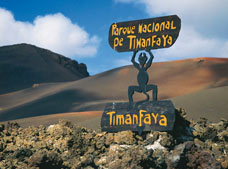
For visitors who would prefer to explore the volcanic landscapes of Lanzarote without the environmental and legal complications, the island offers an extensive network of well-marked walking and hiking trails, an established cycling infrastructure with both road and gravel options, and official guided excursions through Timanfaya National Park and other protected areas that are designed to minimise environmental impact.
The Wider Picture
The buggy tour debate sits within a much broader conversation taking place across the Canary Islands and the wider European tourism industry about the carrying capacity of popular destinations and the balance between visitor experience and environmental protection. Lanzarote's tourism strategy under Cabildo president Oswaldo Betancort has consistently emphasised what he has described as "contained growth", with the island's 2025 visitor numbers up 1.4 percent year-on-year, the lowest growth rate of any Canary Island and consistent with a deliberate prioritisation of quality over quantity.
The enforcement action against illegal off-road tours fits the same overall pattern. The island is signalling that the type of tourism it wants to attract and retain is one that operates within the legal and environmental constraints in place to protect the landscapes and wildlife that draw visitors in the first place. The combination of formal warnings, sanctions and growing operator scrutiny suggests that the off-road excursion model as it has operated to date will need to adapt significantly to remain viable on