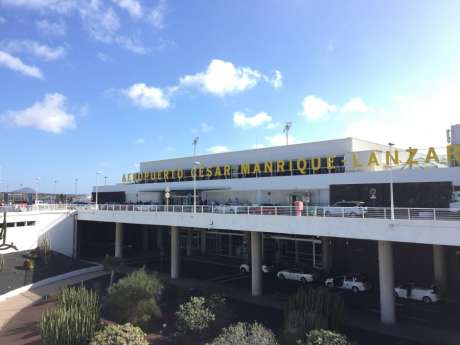



Official data shows 717,869 passengers passed through the airport during April, a 3.7 percent decrease compared with the same month in 2025. The total represents roughly 27,000 fewer travellers than a year earlier, though Lanzarote remains one of the busiest tourism gateways in the Canary Islands.
The figures form part of a wider regional pattern. Across the archipelago, Canary Islands airports handled a combined 4,428,218 passengers in April, down 3.5 percent on the same month last year. Gran Canaria led the regional table with 1,310,395 passengers (a 2.8 percent decrease), followed by Tenerife South with 1,063,254 (down 8.2 percent) and César Manrique-Lanzarote in third place. Tenerife North recorded growth of 4.7 percent, with smaller increases at La Palma, El Hierro and La Gomera, suggesting a mixed rather than uniform decline across the islands.

Strike Action a Significant Factor
A central cause of April's softer numbers is the indefinite air traffic control strike that began at midnight on 17 April 2026. The action, called by the Union of Air Traffic Controllers (USCA) and Comisiones Obreras (CCOO) against private tower operator SAERCO, affects 14 Spanish airports, with Lanzarote and Fuerteventura among the most heavily impacted.
The dispute followed the breakdown of mediation talks earlier in the month and has produced rolling delays and cancellations across services operated by Ryanair, easyJet, Jet2, TUI, British Airways, Vueling, Iberia and Binter Canarias. Spanish press reports estimated that around 20,000 flight movements and 2.6 million passengers could be disrupted during the first month of the strike alone. Industrial action is currently expected to continue until at least 31 May 2026.
Lanzarote faces a particular vulnerability during the dispute. The airport falls within both the SAERCO air traffic control network and the active Groundforce zone, meaning that if baggage handler stoppages overlap with the ATC walkout, the airport could simultaneously lose both air traffic and ground handling cover. No other Spanish airport carries this dual exposure.
Cost Pressures and Border Delays Add to the Picture
Beyond the strike, broader European travel conditions have also weighed on passenger numbers. Rising airfares, sustained fuel prices and continuing cost-of-living pressures have led some families to delay bookings, shorten trips or choose closer destinations. Several major European airports reported weaker passenger growth in April, suggesting Lanzarote's small dip reflects continental trends rather than any decline specific to the island.
The phased rollout of the European Entry/Exit System has also lengthened passport control queues at Spanish airports, adding friction to the overall travel experience and contributing to delays during peak periods.
Tourism Performance Remains Strong in Historical Terms
Despite April's decline, Lanzarote Airport continues to operate close to record levels. In 2025, the airport handled 8,920,901 passengers, a 2.4 percent increase on 2024 and the busiest year in its history. Annual passenger volumes have risen consistently since the post-pandemic recovery, climbing from 8.2 million in 2023 to 8.7 million in 2024 before reaching last year's record.
The airport now operates at approximately 90 percent of its capacity, prompting longer-term plans to physically connect Terminals 1 and 2 and expand parking provision. Lanzarote currently handles around 1,400 weekly flights and maintains connections to more than 83 airports across 21 countries. The United Kingdom and Germany together account for almost 69 percent of international traffic, with Ireland and France also representing significant source markets.
Earlier months of 2026 told a more positive story. The airport recorded 709,321 passengers in February, a 0.5 percent increase year-on-year, and 794,349 in March, a marginal 0.6 percent decline. Cumulative figures for the Canary Islands as a whole show airports across the region handled 18,585,501 passengers between January and April, just 0.8 percent below the equivalent period in 2025.
Practical Advice for Travellers
For visitors with trips booked during the disruption period, airlines and tourism bodies have issued consistent guidance. Travellers are advised to arrive at the airport at least two hours before international departures, with additional buffer time during peak holiday weeks. Checking airline communications in the days before travel remains essential while the ATC dispute continues. Airport transfers and car hire should be booked in advance, particularly during school holiday periods, and passengers affected by strike-related cancellations retain their rights under EU Regulation 261/2004, including meal vouchers and accommodation where applicable.
Airport operations have continued throughout the strike period, and airlines are maintaining their planned summer schedules from the United Kingdom, Ireland and mainland Europe.
Local Economic Context
Tourism remains the foundation of Lanzarote's economy, and airport passenger figures continue to serve as one of the clearest indicators of visitor demand. The island's appeal rests on a combination of year-round sunshine, varied coastline, established resorts in Puerto del Carmen, Playa Blanca and Costa Teguise, and the volcanic landscapes that draw repeat visitors. Diving, watersports, cycling and family tourism each contribute significantly to annual visitor totals, supported by strong year-round flight connectivity from the UK and Ireland.
In a separate but related development, Club La Santa confirmed earlier this year that the 2026 IRONMAN Lanzarote, scheduled for 23 May, will be the final edition organised by the club after more than three decades of involvement with the event.
Outlook
Industry analysts expect Lanzarote's passenger numbers to recover during the summer and winter peak seasons, particularly once the SAERCO dispute reaches resolution. Forward bookings from the UK and Ireland for July and August are reported to remain healthy, suggesting that April's decline reflects short-term disruption rather than any structural change in demand.
For now, the headline figure represents a small step back in an otherwise strong year for the island's primary gateway, with the broader trajectory of Lanzarote tourism remaining firmly on course.