


The incident, confirmed by local news outlets on 24 June, has drawn fresh attention to a problem that has been quietly eroding Lanzarote's protected landscapes for years.
When approached by environmental officers, the group reportedly claimed to be geology students. The wardens were unconvinced, particularly once they discovered that the rucksacks contained several samples of volcanic rock including olivine specimens, along with a geological hammer that had clearly been used to extract them. The group did not hold any of the permits required to remove material from a protected area, and the case has now been reported for possible sanction.
Fines of Up to €3,000 for the Most Serious Offences
Removing rocks, minerals or natural material from a protected area on Lanzarote is treated as an environmental offence rather than a minor inconvenience. Fines for taking stones from a protected zone range from €150 for minor cases through to €6,000 for the most serious offences, with the most common penalty range falling around €3,000 for cases like this one where extraction tools have been involved. The specific sanction imposed in any individual case depends on the quantity removed, the sensitivity of the area, and whether the offender was acting deliberately or out of ignorance.
Geological hammers in particular are treated as evidence of intent. Removing a small pebble that has caught the eye on a walk is one matter; arriving at a protected volcanic area with a hammer and a rucksack is something else, and the legal framework reflects the difference.
A Tonne of Natural Material Stolen Every Year
The most striking element of the story is the scale of the wider problem. Lanzarote loses approximately one tonne, or 1,000 kilograms, of natural material from its protected spaces every year, according to figures previously released by Samuel Martín, the Cabildo's Environment Minister. The vast majority of that material consists of lithic material, stones, rocks, ash and sand removed by visitors who either do not realise they are committing an offence or who decide the souvenir is worth the risk.
The figures are even more striking on Fuerteventura, where the famous Popcorn Beach near Corralejo loses around 1,000 kilograms of its distinctive volcanic sand every month, despite prominent signs warning visitors that removal is illegal. The cumulative impact across the eastern Canary Islands runs into significant volumes of irreplaceable material, with measurable effects on the protected landscapes themselves.
The importance of Olivine in Geology
The specific mineral the wardens found in the rucksacks adds another layer to the case. Olivine is a magnesium iron silicate that forms in the mantle and is brought to the surface by volcanic activity, where it often appears as small green crystals embedded in basalt. The deep green crystals are visually striking, which makes them attractive to amateur collectors, and they have genuine scientific value for researchers studying the formation of the islands and the volcanic processes that shaped them.
The Canary Islands as a whole are recognised as one of the more interesting global locations for olivine, and Lanzarote's volcanic landscape carries deposits that have helped researchers piece together the geological history of the archipelago. Each crystal removed without authorisation represents a small loss of scientific information, but the cumulative effect across thousands of unauthorised collectors is significant.
Los Volcanes Natural Park And It's Protected Status
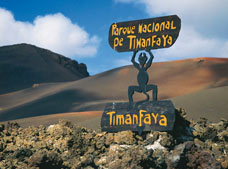
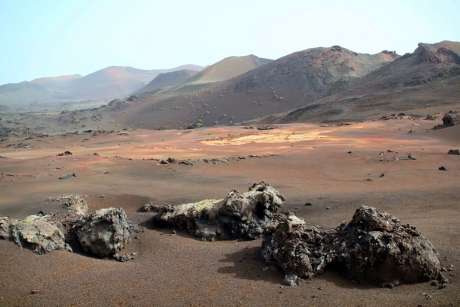
Los Volcanes Natural Park covers 10,158 hectares of central Lanzarote across the municipalities of Tías, Tinajo and Yaiza, surrounding the more famous Timanfaya National Park on its western side. The park was declared protected in 1987 and forms part of the wider UNESCO Biosphere Reserve designation that covers the entire island. It also holds Special Protection Area for Birds status under European environmental legislation.
The landscape inside the park is the product of the historic eruptions of 1730 to 1736 and 1824, with lava fields, volcanic cones, hornitos (small volcanic chimneys), lava tunnels and ancient craters preserved in extraordinary condition because of Lanzarote's arid climate, which slows the natural vegetation processes that would normally cover and break down the rock formations. The result is an open-air museum of volcanology that has no real parallel anywhere in Europe.
The same arid conditions that preserve the landscape also make it slow to recover from any disturbance. A footprint in soft volcanic ash can remain visible for years. A removed rock leaves a gap that the local geology cannot replace. This is not the kind of place that heals quickly.
Lanzarote has just 8 Rangers, protecting the island
One of the structural challenges facing the authorities is the scale of the area they are responsible for monitoring versus the resources available. Lanzarote currently has just eight environmental rangers covering the entire island, including all protected areas, the wider Biosphere Reserve and the surrounding marine environment. The Cabildo's environment department has been calling for additional staff for several years, alongside clearer information at park entry points and on tourist routes.
The reality is that most of the natural material removed from protected areas is intercepted at Lanzarote Airport during security and customs checks. The challenge for the authorities is proving that any specific rocks or stones were taken from a protected area rather than from a public space, which means many offenders are simply asked to hand the material over rather than facing the full sanction available under the law. The confiscated stones often end up being used by the airport's own gardeners.
What Visitors Should Do Instead
For souvenirs, look for items produced by local artisans using legitimately sourced materials. Volcanic rock jewellery, ceramics, sculptures and decorative pieces are widely available across the island, including at the Sunday market in Teguise, the Haría craft market on Saturdays, and the gift shops attached to the major CACT sites. Buying from local makers supports the island economy and leaves the protected landscapes intact for the next visitor and the one after that.
For anyone with genuine scientific or educational interest in the geology of the island, the appropriate route is to contact the Cabildo's environment department in advance and apply for the relevant research permissions. Universities, schools and research institutions regularly conduct authorised geological work in the protected areas, and the framework exists to allow that work to happen without compromising the landscapes.
This week's incident is a useful reminder that Lanzarote's protected landscapes are not a free-for-all souvenir resource. The vast majority of visitors to the island treat the volcanic environment with the respect it deserves, contribute meaningfully to the local economy through legitimate spending, and head home with photographs and memories rather than rocks in their luggage. The minority who think the rules do not apply to them are doing measurable damage to one of the most distinctive landscapes in Europe, and the legal framework is gradually catching up with them.
For anyone planning a visit to Los Volcanes, Timanfaya, the salt flats at Janubio, the cliffs at Famara or any of the island's other protected areas, the message from the authorities is simple. Walk on the marked paths. Leave the rocks where they are. Take pictures, not pebbles. Report any damage you see to the environmental services. The future of Lanzarote's volcanic landscape depends on the people who visit it, and the small choices made by thousands of tourists each year add up either way.