













The Best Things to Do in Lanzarote
Your Complete Local Guide to the Island
Lanzarote packs an extraordinary amount into a relatively small island. In a single week you can climb a volcano, dive with angel sharks, sip wine from vines grown in black volcanic ash, watch a Spanish second-division football match, hop on a boat to a smaller island that feels untouched by time, eat at a Michelin-recommended restaurant, and finish the day with cocktails on a sunset terrace overlooking the Atlantic. Whether you've been coming here for twenty years or you're planning your first trip, the breadth of what's possible on the island is one of the things that keeps bringing people back.
This guide pulls together the things genuinely worth doing on Lanzarote, written from the perspective of someone who lives here and gets asked these questions constantly. It covers the big-name attractions you've probably heard of, the smaller experiences that often turn out to be the highlight of a trip, the practical detail you actually need, and a few things that don't tend to make it into the standard guidebooks.
Timanfaya National Park and the Volcanic Landscape
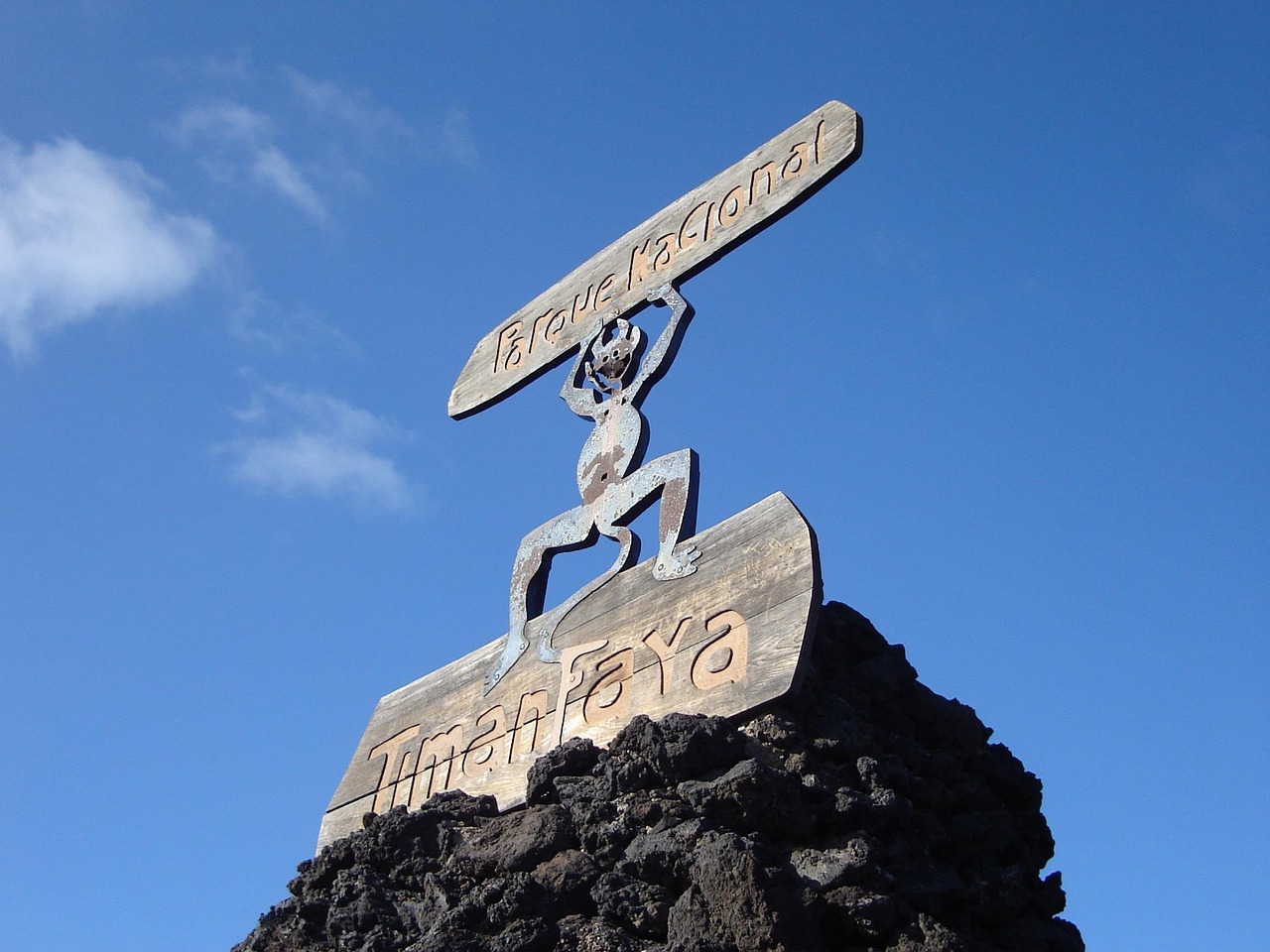
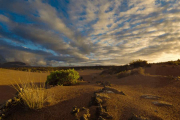
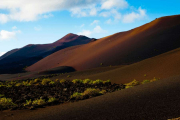
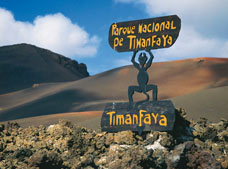
Let's start with the obvious. Timanfaya National Park is the attraction most people associate with Lanzarote and the one absolutely worth making time for. The 50-square-kilometre park, spread across the municipalities of Tinajo and Yaiza, was formed by the catastrophic eruptions of the early 18th century that buried entire villages and reshaped a third of the island. The result is a Martian-looking landscape of jet black lava fields, deep red and ochre craters, and ground so hot just metres below the surface that park staff can pour water into a borehole and watch it explode back out as steam within seconds.
The standard visit costs €30 for adults and includes the geothermal demonstrations at the Islote de Hilario and the 14-kilometre Ruta de los Volcanes coach tour through the most spectacular sections of the park. As of June 2026, all bookings now run through a timed-entry system on the official CACT Lanzarote website, so plan ahead, particularly during the summer and school holiday periods. The El Diablo restaurant inside the park grills meat using the geothermal heat from the volcano below, which is one of those experiences you won't get anywhere else in the world.
Just outside the park, the village of Mancha Blanca hosts the Centro de Visitantes, a free interpretation centre that's worth a stop for context on the eruptions and the geology. Pair the Timanfaya visit with the dramatic cliffs at Los Hervideros, where Atlantic swells crash into volcanic sea caves and send spray exploding through blowholes, and the green saltwater lagoon at El Golfo, a half-submerged volcanic crater that's become one of the most photographed spots on the island.
La Geria and the Wine Country
Lanzarote produces some of the most distinctive wine in Europe, grown in conditions that look impossible. The La Geria wine region sits in the volcanic interior between Yaiza and Tinajo, where each vine is planted in a hand-dug hollow in the black volcanic ash and protected by a semi-circular stone wall called a zoco. The wall shields the vine from the trade winds while the volcanic ash retains overnight moisture and releases it slowly through the day, allowing vines to flourish in what looks like a lunar landscape.
The Ruta del Vino runs the length of the valley and takes in around a dozen wineries, most of which offer tastings and tours. Bodegas El Grifo, founded in 1775 and the oldest winery in the Canary Islands, has an excellent wine museum alongside the tasting rooms and is the obvious starting point. Bodega La Geria, Rubicón and Stratvs all offer different angles on the same volcanic terroir, and most can be visited on a half-day drive with stops for lunch.
The wines themselves are unlike anything you'll have tried elsewhere in Spain. The dominant grape is the Malvasía Volcánica, which produces crisp, mineral whites with a distinctive smoky volcanic edge. The reds, made primarily from Listán Negro, are lighter and fresher than mainland Spanish reds. Take a couple of bottles home if you have luggage space; very few Lanzarote wines are available outside the island and the Canary archipelago.
The César Manrique Sites
You can't understand Lanzarote without understanding César Manrique. The artist, architect and environmentalist born in Arrecife in 1919 is the single most influential figure in the island's modern history, and his insistence that all development should respect the natural landscape is the reason Lanzarote looks the way it does today. The building height restrictions, the white-washed houses with green or blue woodwork, the absence of large advertising hoardings, all of it comes back to Manrique.
Several of his major works are now run as visitor attractions by the CACT, and four are absolutely essential. The Jameos del Agua in the north of the island is a series of volcanic caves transformed into one of the most beautiful concert venues in the world, with a turquoise underground lake home to a unique species of blind albino crab. The Cueva de los Verdes nearby is a six-kilometre lava tube formed by the same eruption, with guided tours through dramatically lit underground caverns. The Mirador del Río is a cliff-top viewpoint at the northern tip of the island, carved into the rock face, with breathtaking views across the strait to La Graciosa. The Fundación César Manrique, in his former home built into a series of volcanic bubbles in Tahíche, is essentially a private gallery and architectural masterpiece in one.
The Jardín de Cactus in Guatiza, his final major work before his death in 1992, is a spectacular cactus garden built into a former volcanic quarry. The Castillo de San José in Arrecife houses the International Museum of Contemporary Art (MIAC) and a panoramic restaurant overlooking the port. If you have time, get a multi-site ticket and work through them at your own pace over several days. They are the soul of the island in a way that no resort can match.
La Graciosa: The Eighth Canary Island
One of the great Lanzarote experiences is taking the ferry across to La Graciosa, the small island that sits off the northern coast. Officially recognised as the eighth Canary Island in 2018, La Graciosa has no asphalt roads, around 700 residents, two small villages, and some of the most stunning beaches in the entire archipelago. It feels like stepping back fifty years.
The ferry runs from Órzola in the north of Lanzarote, with crossings every 30 to 60 minutes during the day depending on the season. The journey takes around 25 minutes and the return ticket costs roughly €26. The arrival port is Caleta del Sebo, a sleepy fishing village with a few restaurants, a couple of small shops, and bicycle rental places ready to kit you out for the day. There are also 4x4 taxis that will take you to the more remote beaches, which is the easier option if you only have a day and want to cover ground.
The beaches are what make the trip. Playa de las Conchas on the western side of the island is one of the most beautiful beaches anywhere in the Canaries, with white sand, turquoise water and the dramatic backdrop of Montaña Bermeja. Be careful of currents here as swimming can be dangerous. Playa Francesa, closer to Caleta del Sebo, is calmer and safer for families. Spend the day, eat seafood at one of the harbour restaurants, and catch a later ferry back. If you want to extend the experience, simple guesthouses in Caleta del Sebo can be booked for an overnight stay that gives you the island almost to yourself once the day trippers leave.
Day Trips to Fuerteventura and Los Lobos
Fuerteventura sits about an hour and a half south of Lanzarote by ferry from Playa Blanca to Corralejo. The two main operators, Líneas Romero and Naviera Armas, run multiple daily crossings, and a return foot-passenger ticket costs around €30 to €35 depending on the operator and the season. The crossing itself is short and the schedule allows for a comfortable day trip even from the more distant Lanzarote resorts.
Corralejo at the northern tip of Fuerteventura is a busy resort town with a long beach, a lively harbour and plenty of restaurants. The real draw for a day trip, though, is the Parque Natural de las Dunas de Corralejo, the vast white sand dune system that stretches south along the coast for kilometres. It's spectacular and feels completely different to anything on Lanzarote. Rent a car at Corralejo if you want to drive further into Fuerteventura, or take a bus to the dunes if you're happy to spend the day around the northern beaches.
The third island in this mini-archipelago is Lobos, a tiny uninhabited volcanic island sitting in the strait between Lanzarote and Fuerteventura. Day trips to Lobos run from both Corralejo (15-minute crossing) and Playa Blanca (around 30 minutes), with daily visitor numbers now capped to protect the fragile ecosystem. Booking ahead is essential. The island has one restaurant, a network of walking paths, a lighthouse, and beaches that look like they belong on a postcard. Allow most of a day for the visit and bring water and sun protection because there's almost no shade.
The Best Beaches on Lanzarote
Lanzarote's beaches vary dramatically by location and exposure. The big-name resort beaches in Puerto del Carmen, Costa Teguise and Playa Blanca are family-friendly with the usual full range of facilities, while the wilder beaches in the north and west of the island feel almost untouched. A few stand out.
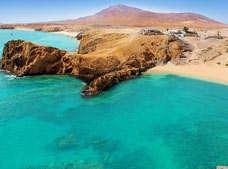
Playa Papagayo near Playa Blanca is the most famous beach on the island and rightly so. It's actually a series of small golden sand coves separated by low cliffs, accessible by a rough dirt road (small entry fee per vehicle) and offering some of the cleanest swimming water you'll find anywhere in the Canaries. Get there early to beat the crowds and the heat.
Famara in the north-west is something else entirely. A vast crescent of golden sand stretching for around six kilometres beneath the dramatic Risco de Famara cliffs, this is the surf and kitesurf beach of the island. The Atlantic swell can be powerful and swimming requires more caution than the southern resort beaches, but for atmosphere and scale Famara is unmatched. The village of Caleta de Famara at the southern end has a handful of surf schools, a few good restaurants and a genuine laid-back local feel.
Playa de Janubio on the south-west coast sits next to the working salt flats and offers black volcanic sand and a wild atmosphere. Caletón Blanco in the north has unusually white sand against the black volcanic rock, creating a striking contrast. El Reducto in Arrecife is the city beach, surprisingly clean and well-protected, perfect for a quick swim if you find yourself in the capital. Playa Mujeres next to Playa Blanca offers calmer waters and is a less crowded alternative to Papagayo. Playa Quemada, a former fishing village south of Puerto del Carmen, has a quiet pebble beach and excellent fresh fish restaurants right on the seafront.
Water Sports and the Sea
Lanzarote's combination of consistent trade winds, warm water and varied coastline makes it one of the best water sports destinations in Europe. Each beach and resort tends to specialise in different disciplines.
Famara is the heart of the surf and kitesurf scene, with several long-established schools offering lessons for all levels and equipment rental for experienced riders. The wave conditions here are reliable from autumn through to spring, with summer offering gentler conditions that work better for beginners. Costa Teguise is the main windsurfing centre, with the bay between Playa de las Cucharas and Playa del Jablillo offering ideal conditions for learners and intermediates.
Scuba diving is excellent right around the island, with the waters off Puerto del Carmen and Playa Blanca offering the most accessible dive sites. Playa Chica in Puerto del Carmen is one of the most famous shore dives in Europe, with consistent sightings of angel sharks during the autumn and winter breeding season, plus rays, octopus and a huge variety of fish life. PADI and SSI dive centres operate from all the main resorts and offer everything from introductory try dives to full certification courses.
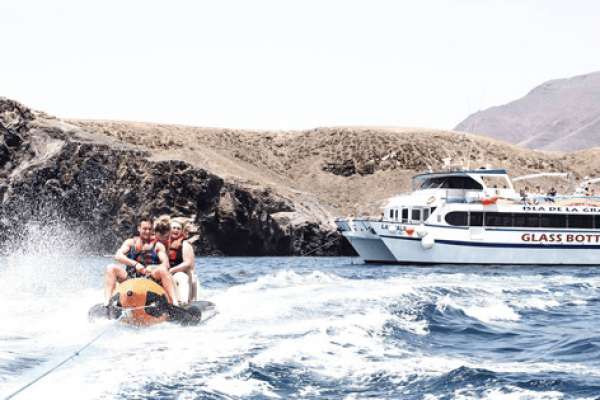
Jet ski hire is widely available from Puerto del Carmen, Playa Blanca and Costa Teguise, with guided coastal tours typically lasting 30 to 60 minutes and ranging from about €60 to €120 depending on duration. Stand-up paddle boarding, kayaking and snorkelling are all easy to organise from the same beachfront operators. For something more adventurous, catamaran day cruises along the south coast typically include lunch, drinks and stops for swimming at Papagayo, with prices around €60 to €90 per person.
Walking, Hiking and the Volcanic Landscape
Lanzarote rewards walkers in a way that surprises most first-time visitors. The combination of varied volcanic terrain, dramatic coastal cliffs, the open inland plateau and the smaller islands offers everything from gentle coastal strolls to genuinely challenging hill walks.
The walk to Caldera Blanca, a perfectly formed white-walled volcanic crater near Mancha Blanca, is the most popular hike on the island. The full circuit takes around three to four hours and includes the option of walking around the entire crater rim, with views across the whole northern half of the island. Start early to avoid the heat, take plenty of water, and wear proper walking shoes because the volcanic ground is sharp.
The Risco de Famara cliff walk in the north-west offers spectacular views across to La Graciosa and a genuine sense of remote landscape. The route from the village of Haría down to the cliff edge at the Mirador del Río area can be combined with the visit to the Manrique viewpoint for a half-day outing. The Pico Redondo loop in the south offers another accessible volcanic hike with excellent panoramic views.
For something more gentle, the coastal path between Puerto del Carmen and Puerto Calero is an easy two-hour walk along the cliffs with the option to return by water taxi or local bus. The walking trails in Timanfaya itself are very limited and require advance booking with a park ranger, but the Caldera de los Cuervos trail just outside the park boundary offers a spectacular volcanic walk that's open to the public without permits.
Eating Out and Dining
The Lanzarote food scene has matured significantly over the past decade. Alongside the predictable resort restaurants you'll now find genuine destination dining at the high end, an excellent network of family-run local places, and a thriving seafood scene that takes full advantage of the surrounding Atlantic.
For local Canarian cuisine done well, look for restaurants serving papas arrugadas (wrinkly salt-boiled potatoes) with mojo verde and mojo rojo (coriander and red pepper sauces), fresh grilled fish from the day's catch, queso asado (grilled local goat cheese with palm honey), and goat stew (cabra). The fishing villages of El Golfo, Puerto del Carmen, Playa Blanca and Playa Quemada all have excellent seafood options where the fish is genuinely landed locally. La Tegala in Mácher and Lagomar in Nazaret are at the higher end and worth dressing up for.
For more casual dining, the old town of Puerto del Carmen along the harbour front has a string of long-established Italian and Spanish places that consistently deliver. The Marina Rubicón in Playa Blanca offers a more upscale waterfront strip with a mix of international and Mediterranean food. Arrecife's Charco de San Ginés area, the picturesque lagoon in the heart of the capital, is increasingly the place to go for evening tapas and atmospheric dining away from the resort crowd.
The international scene is genuinely strong too. There are excellent Indian restaurants in all the main resorts, decent Chinese options, several good Italian destinations including some run by Italians, and a growing number of vegetarian and vegan-friendly places that have appeared over the past five years. Whatever your preference, you won't struggle to eat well on the island.
Nightlife and Live Music
Lanzarote's nightlife centres on Puerto del Carmen, particularly the strip along Avenida de Las Playas that runs from the old harbour up through Matagorda. This is the loud, late, all-summer end of the spectrum, with a long row of bars and clubs catering primarily to younger British and Irish visitors. The Paradise complex and the surrounding venues stay open into the early hours and offer everything from karaoke to commercial dance music to live tribute acts.
For something more laid back, the marinas at Puerto Calero and Marina Rubicón offer a more refined evening atmosphere with cocktail bars, restaurants and occasional live music. Costa Teguise is somewhere between the two, with a smaller but reliable cluster of bars around the Pueblo Marinero square. Arrecife's nightlife is increasingly worth a look, particularly the Charco de San Ginés area and the bars along Calle León y Castillo.
Live music on the island has improved significantly. The CIC El Almacén in Arrecife runs a year-round programme of concerts, gigs, film and theatre. The Centro Sociocultural La Tegala and the Teatro Insular host larger touring acts and local productions. The Sonidos Líquidos festival in La Geria is the cultural highlight of the early summer (when the weather permits), and the Lanzarote Live Festival each autumn brings international acts to outdoor venues. Many of the resort hotels run their own evening entertainment programmes, and the better restaurants in Puerto del Carmen and Playa Blanca often have live music a few nights a week during the high season.
Buggy Tours, Quads and Land-Based Excursions
Buggy and quad bike tours are widely marketed across the island, but worth a quick word of caution. Following sustained pressure on the volcanic landscape and significant complaints from rural residents, the Cabildo has been actively enforcing rules that prohibit organised convoys on rural land and within protected natural areas. The first major fine for an operator running illegal routes was issued in late 2025. The tours themselves are not banned, but the legal route options are now more limited than the marketing material from some operators suggests. If you do book a buggy or quad tour, ask the operator directly to confirm that the route stays on public roads and that they hold the necessary municipal authorisation.
For something less environmentally controversial, jeep safari tours run year-round and offer guided trips into the volcanic interior with proper licensing and routes that comply with the conservation rules. These typically include lunch and stops at several of the major landmarks across a full day. Camel rides at the edge of Timanfaya remain an option for those interested, though the experience is fairly brief.
Cycling tours are an excellent alternative for active travellers, with multiple operators offering road bike, gravel and e-bike rental alongside guided tours. The island is internationally recognised as one of the best cycling training destinations in Europe, with the IRONMAN bike course running through some of the most spectacular landscape, and the consistent climate making winter cycling holidays particularly popular.
Water Parks and Family Attractions
For families with children, Aqualava Waterpark in Playa Blanca is the main water park on the island. It's well laid out with a good mix of slides for all ages, a wave pool, a lazy river and proper shaded areas, and a full day there comfortably fills a sun-soaked afternoon. Adult tickets are around €30 with discounts for children and family groups.
Rancho Texas Lanzarote Park in Puerto del Carmen combines a small zoo with a swimming pool complex, animal shows including parrots and birds of prey, and pony rides for younger children. It's not as polished as some larger Spanish parks but works well for a family day out, particularly for younger kids.
Pirate Mini Golf in Costa Teguise and Playa Blanca offers a fun evening activity for families. The Mercadillo de Teguise on Sunday mornings is the largest market on the island and a good family outing in itself, with hundreds of stalls, live music, food and atmosphere across the historic former capital. Submarine Safari at Marina Rubicón takes paying passengers down to around 30 metres in a real submarine for a 50-minute tour of the seabed off Playa Blanca, which is unique enough to be worth the cost for families with curious children.
Shopping
Shopping on Lanzarote splits broadly into three categories. The resort areas of Puerto del Carmen, Playa Blanca and Costa Teguise have the usual mix of tourist shops, beach gear, leather goods and the kind of generic souvenir stalls you'll find at any Spanish resort. The Centro Comercial Biosfera and Centro Comercial Marítimo in Puerto del Carmen, and the Centro Comercial Rubicón in Playa Blanca, gather most of this into walkable shopping complexes.
For more interesting shopping, head into Arrecife. The pedestrianised Calle León y Castillo and the surrounding streets have a much wider range of Spanish high street fashion, jewellery, leather and homeware. The El Charco area around the lagoon has a growing number of independent boutiques and design-led shops. Saturday mornings around the Recova covered market are particularly atmospheric.
The Sunday market at Teguise is the must-visit market on the island and runs from 9am to 2pm in the historic former capital. Expect to find local crafts, handmade jewellery, leather goods, ceramics, food stalls, live music and the kind of atmosphere that makes it one of the best mornings out of the week. Arrive early to get parking and to beat the heat. The Haría craft market on Saturday mornings is smaller but equally worthwhile, with a more focused emphasis on genuine local makers.
For Lanzarote wines, the bodegas in La Geria all sell direct, and the prices are better at source than in resort shops. Local cheeses (queso curado and queso semicurado from goat's milk), Aloe vera products from the local plantations, and sea salt from the Janubio salt flats all make distinctive Lanzarote-specific gifts that travel well.
UD Lanzarote and Local Sport
For sports fans, catching a UD Lanzarote football match is one of the more interesting low-key things you can do on the island. The club currently plays in the third tier of Spanish football and the atmosphere at the Estadio Municipal Ciudad Deportiva Lanzarote in Arrecife is properly local, with ticket prices a fraction of mainland Spanish football and a chance to see Spanish football at a more authentic, community level. The season runs from late August through to May, with matches typically played on weekend afternoons.
Lanzarote is also a major destination for amateur and elite endurance sport. The IRONMAN Lanzarote takes place each May (although the 2026 edition organised by Club La Santa was the final under their management), and the island has long been a winter training base for professional triathletes, cyclists and runners drawn by the consistent climate and challenging terrain. The Club La Santa sports resort in Tinajo is one of the most famous training facilities in Europe.
For more casual sport, there are several decent golf courses including Lanzarote Golf in Puerto del Carmen and Costa Teguise Golf, both of which welcome visitors. Tennis and padel facilities are widely available across the resorts. Running, cycling and open-water swimming are essentially year-round activities given the climate.
Cultural Sights Beyond Manrique
Beyond the Manrique sites, the island has a quiet but genuine cultural depth that rewards exploration. The Castillo de Santa Bárbara above Teguise houses the Museo de la Piratería, telling the story of the pirate raids that shaped the island's history. The Casa Museo del Campesino in San Bartolomé, also designed by Manrique, celebrates the agricultural traditions of the island. The Museo Etnográfico Tanit in San Bartolomé is privately run and absolutely worth the visit, with a vast collection of artefacts from traditional rural Canarian life.
Haría in the north is one of the most attractive villages on the island, with the Casa-Museo César Manrique (the artist's actual final home, distinct from the Fundación) open to visitors. The village itself, set in the palm-filled Haría Valley, is one of the most peaceful places on the island. The capital Arrecife rewards a proper visit beyond the shopping streets, with the Castillo de San Gabriel on its small island just offshore, the historic Charco de San Ginés lagoon, and the old fishermen's quarter El Lomo.
Lanzarote Sunsets and Moments
Some of the best things to do on Lanzarote don't fit neatly into any of the categories above. A sunset drink at the Mirador del Río looking across to La Graciosa is one of the great Lanzarote moments. Stargazing in the volcanic interior away from light pollution, particularly during the summer months, is genuinely spectacular thanks to the island's clear Atlantic skies and dark inland landscapes. The salt flats at Janubio are at their most photogenic in the late afternoon light. Sunday afternoon at the Pueblo Marinero square in Costa Teguise during the live music programme is a properly local pleasure.
The Día de Canarias celebrations on 30 May (and the days around it) showcase the local culture, food and music in a way that no normal tourist itinerary captures. The Carnival celebrations in Arrecife in February and the smaller carnival in Playa Blanca later in the spring are riotous and welcoming. The Romería pilgrimages held in different villages throughout the year are deeply rooted local traditions that visitors are warmly welcome to attend.
Planning Your Time
A week on Lanzarote is enough to comfortably take in the major Manrique sites, Timanfaya, a day in La Geria, a day on La Graciosa, a couple of beach days, and a few good meals. Two weeks lets you add Fuerteventura, Lobos, more of the hiking, the smaller museums and a genuinely relaxed pace. Longer stays let the island reveal itself properly.
The best months for general visiting are March to May and September to November, when temperatures are comfortable and crowd levels manageable. June through August deliver reliable beach weather but bring the highest temperatures, the biggest crowds and the highest prices. December to February are the British and Irish winter sun months and remain very popular, with temperatures typically in the high teens to low 20s and the lowest rainfall in Europe.
Car hire is essentially essential if you want to see much beyond your immediate resort. Local providers are generally better value than the international chains, with weekly rates from around €100 to €200 depending on the season. Driving on Lanzarote is straightforward; the road network is modern, distances are short, and outside of resort areas traffic is light.
What makes Lanzarote special isn't any one attraction. It's the way the volcanic landscape, the year-round climate, the architectural restraint, the local culture, the wine, the sea and the genuine warmth of the island's communities combine to make somewhere that rewards both the casual sun-and-pool visitor and the more curious traveller looking to dig deeper. Whether you want to spend a week reading by the pool with the occasional excursion, or pack in volcano hikes, scuba dives, wine tastings and ferry trips to neighbouring islands, the island delivers on both ends of the spectrum and pretty much everything in between.
The single piece of advice worth giving any first-time visitor is to leave at least one day completely unplanned. Lanzarote rewards the kind of trip where you set out in the morning without quite knowing where you'll end up, follow a road into the interior, find a village restaurant for lunch, and let the afternoon unfold from there. Some of the best memories of any Lanzarote holiday come from exactly those moments. The island is small enough that you can't really get lost, varied enough that you'll always find something interesting, and friendly enough that you'll be welcomed wherever you end up.